The Idea
A robot built to stay connected
BotBuddy started from a personal motivation: I wanted a way to stay connected with loved ones from afar — not just over video call, but something more present and interactive. A robot that could move around, stream live video, and be driven remotely from anywhere felt like the right kind of project: real hardware, real software, and a reason to actually build it well.
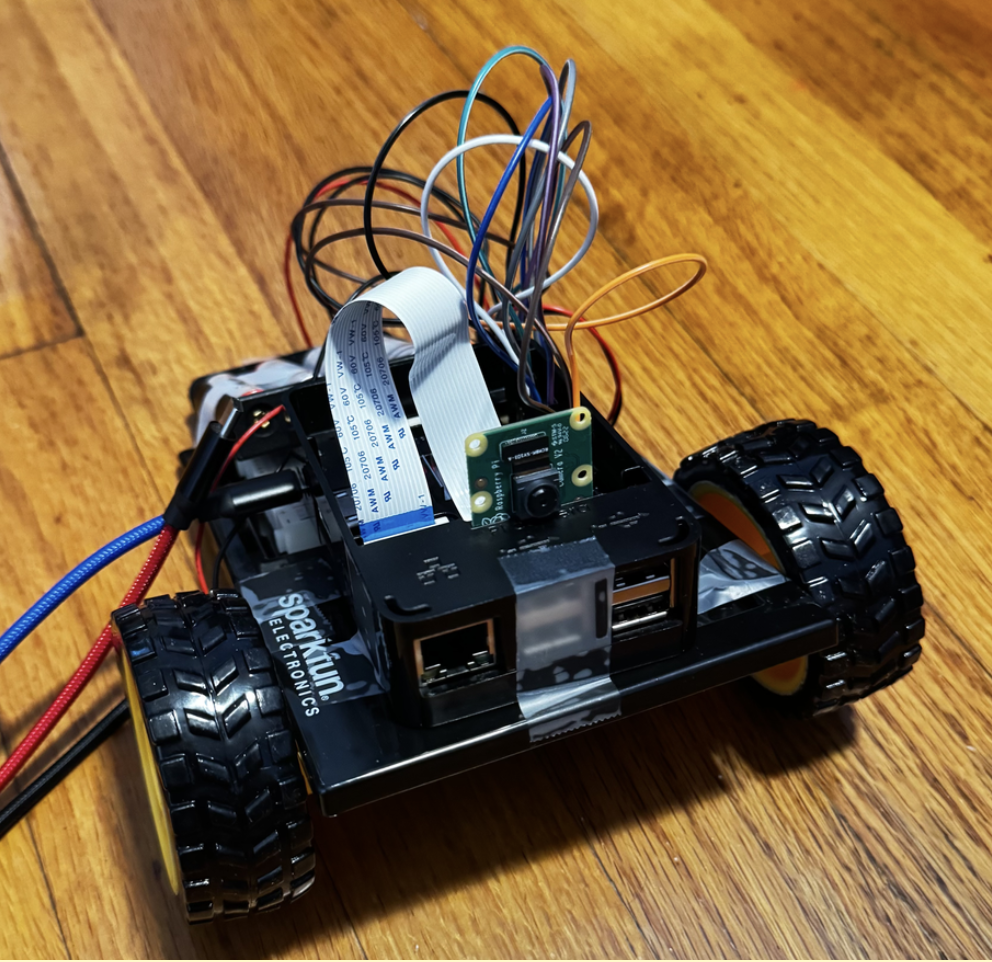
BotBuddy V0 — Raspberry Pi 3 Model B, TB6612FNG motor driver, DC gear motors, and camera module
Tools & Skills
Hardware
- Raspberry Pi 3 Model B
- TB6612FNG dual motor driver
- DC gear motors
- GPIO interfacing
- 4×AA battery pack + USB power bank
Software
- Python (backend logic)
- Flask (web server + control interface)
- HTML (control page)
- Ngrok (secure web tunneling)
Systems
- Live video streaming
- Web-based remote control
- Remote access over public URL
Mechanical & Prototyping
- Breadboarding + wiring
- 3D printing (V1 planned)
- Soldering (V1 planned)
How V0 Works
The robot is built around a Raspberry Pi 3 Model B, which handles all compute — running the Flask server, processing movement commands, and streaming camera output. Motor control runs through a TB6612FNG dual motor driver, wired to the Pi's GPIO pins and driving two DC gear motors. Power is intentionally split: a 4×AA battery pack runs the motors to keep their current draw off the Pi's supply, while a USB power bank runs the Pi and camera separately.
- GPIO pins control the motor driver inputs (direction + PWM speed)
- Camera module connects directly to the Pi's CSI port for low-latency video capture
- Split power supply prevents motor noise from affecting the Pi
The control interface is a Flask web app hosted on the Pi itself. A simple HTML page lets users send movement commands — forward, back, left, right — handled in real time by a Python backend that translates each command into GPIO signals to the motor driver. The camera feed streams live through the same interface.
- Flask routes map directly to motor control functions in Python
- Live video streamed via MJPEG — no external service, runs entirely on the Pi
- Ngrok tunneling exposes the Flask app via a secure public URL, enabling control from any network — not just the same Wi-Fi
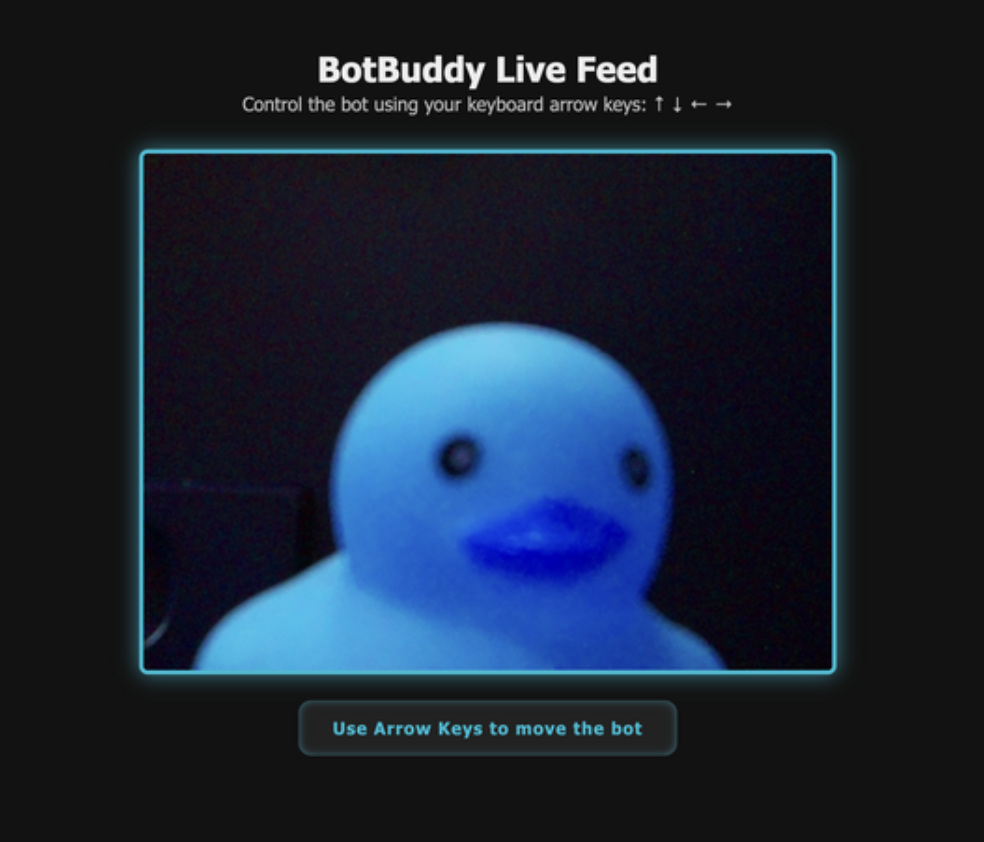
Flask control interface — live camera feed with on-screen movement controls, accessible via Ngrok public URL
Current State — V0
Proof of concept: it works, tape and all
BotBuddy V0 is physically held together with tape and breadboards. That's intentional for a proof of concept — the goal was to validate the full stack (hardware, control software, remote access, live video) before investing in a polished form factor. V0 does exactly that: the concept is validated and the foundation is solid.
What's Next
V1 — making it real
This project has been a fun and hands-on way to apply both hardware and software skills — and I'm excited to keep building on it.