The Problem
Getting into a car shouldn't require a caregiver
For people with mobility, strength, or balance limitations — whether from a long-term condition or a short-term recovery like hip or knee surgery — the step up into a car seat is a genuine barrier. The motion demands leg lift, weight-bearing, and balance control simultaneously. Fall risk is real. For many people, this means depending on a caregiver just to get to a doctor's appointment, not because they can't move, but because no practical tool exists to bridge the gap between standing and seated.
Gap in Existing Solutions
Two extremes, nothing in between
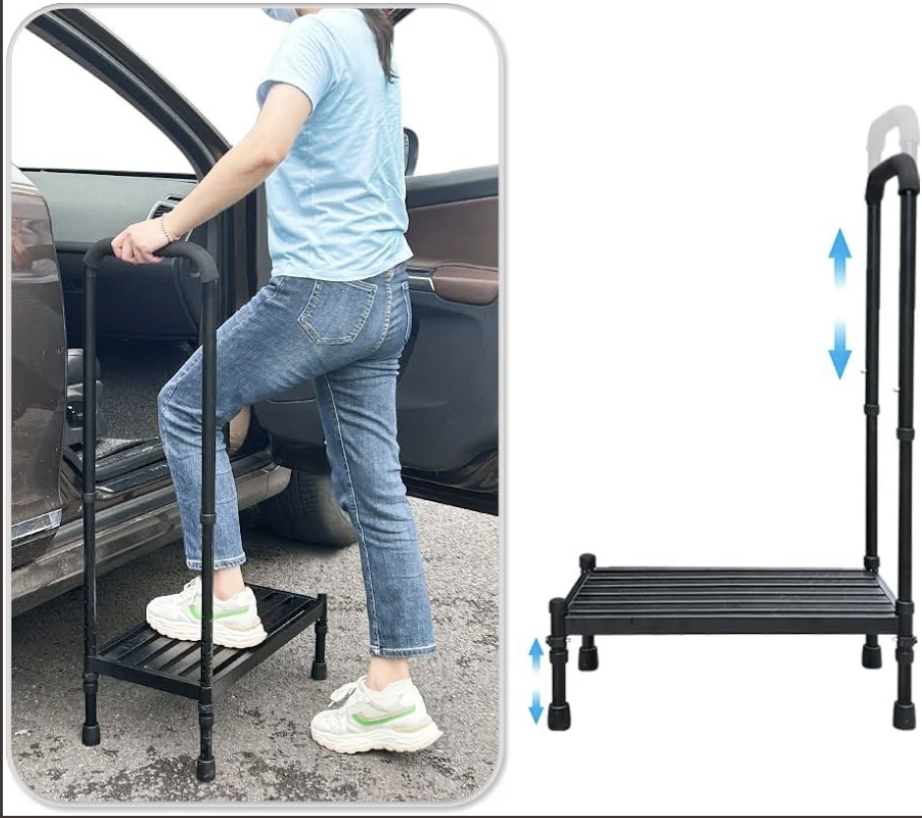
Existing Option A
Adjustable Steps
Lower the entry point, but still require the user to step up under their own power — no help for non-weight-bearers or those with limited leg strength.
✕ Still requires leg liftOur Approach
Portable
Scissor Lift
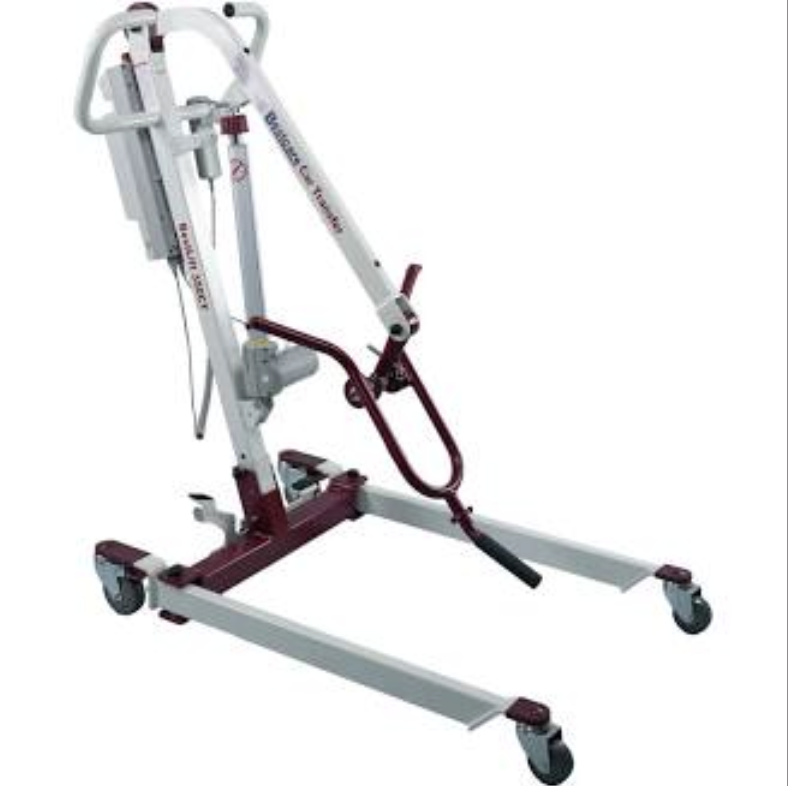
Existing Option B
Body Slings
Effective for full transfers but require a trained caregiver to operate, are expensive, and aren't designed for everyday personal use.
✕ Requires a caregiverNothing practical exists in the middle of that spectrum — a device that provides meaningful mechanical assistance while remaining portable, affordable, and usable without a dedicated attendant. That's the space we're designing into.
Our Approach
Adapted scissor lift — portable, platform-based transfer
The core concept is an adapted scissor lift that raises a person from ground level to car seat height for a low-exertion lateral transfer. It supports two modes — standing and seated — in a single portable unit that folds flat for transport.
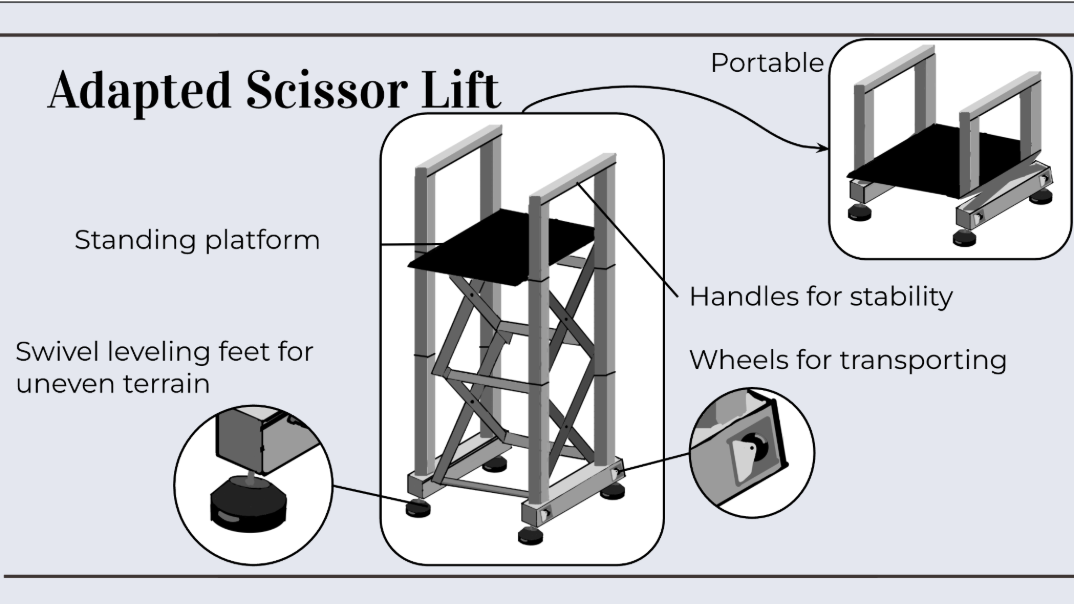
Concept diagram — scissor lift assembly with key components labeled
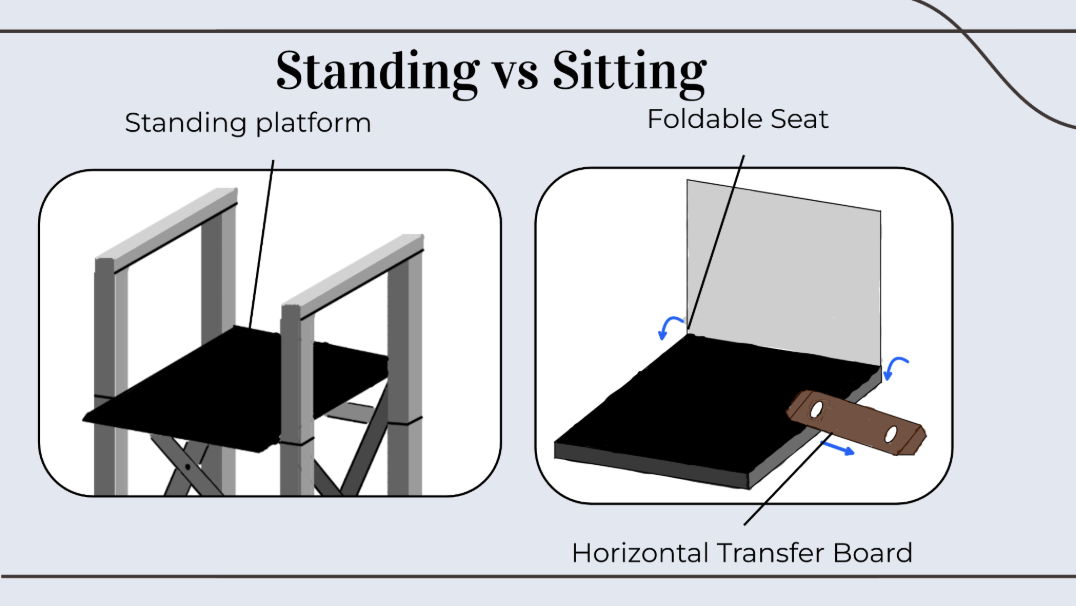
Two transfer modes — standing platform (left) and seated transfer with foldable seat + horizontal transfer board (right)
My Role
Leading the team across design, research, and execution
Team Leadership
- Leading and organizing a 5-person engineering team
- Delegating tasks and running design reviews
- Driving the project timeline and keeping the team aligned on priorities
Design Thinking
- Identified the gap between the two existing product extremes
- Defined project constraints across safety, portability, and adjustability
- Led ideation sessions that converged on the scissor lift concept
User Research
- Conducting interviews with physical and occupational therapists
- Interviewing potential end users to validate the problem and test assumptions
- Using findings to pressure-test the mechanism before committing to CAD
Design Constraints
What we're designing within
Seat Height Range
Must raise the user to the height of a typical car seat — varies by vehicle, so adjustability is built in.
Weight Capacity & Stability
Must safely support a full range of adult body weights on uneven surfaces like parking lots and curb cuts.
Portability
Folds down and fits in a car trunk. Light enough to be manageable by one person, even with limited strength.
Adjustability
Works across different users, car heights, and environments — not built around a single body type or vehicle.
Semi-Independent Use
Safe enough for someone with limited balance to operate without a dedicated caregiver, which is the whole point.
Next Steps