The Problem
CS education has a blind spot
Technical literacy is increasingly essential, but the tools for teaching CS to visually impaired students are either prohibitively expensive or simply don't exist. Sighted students get intuitive drag-and-drop environments like Scratch; blind and low-vision students have been largely locked out of that learning experience — not because the concepts are inaccessible, but because nobody has built the right physical interface for them.
The Solution
Physical blocks that make code tangible
A library of 3D-printed snap-together blocks embedded with Grade 1 Braille and contrasting colors, so blind and low-vision students can physically assemble programs the same way sighted students drag blocks in Scratch. Each block corresponds to a real function, variable, or event in actual block-based coding languages.
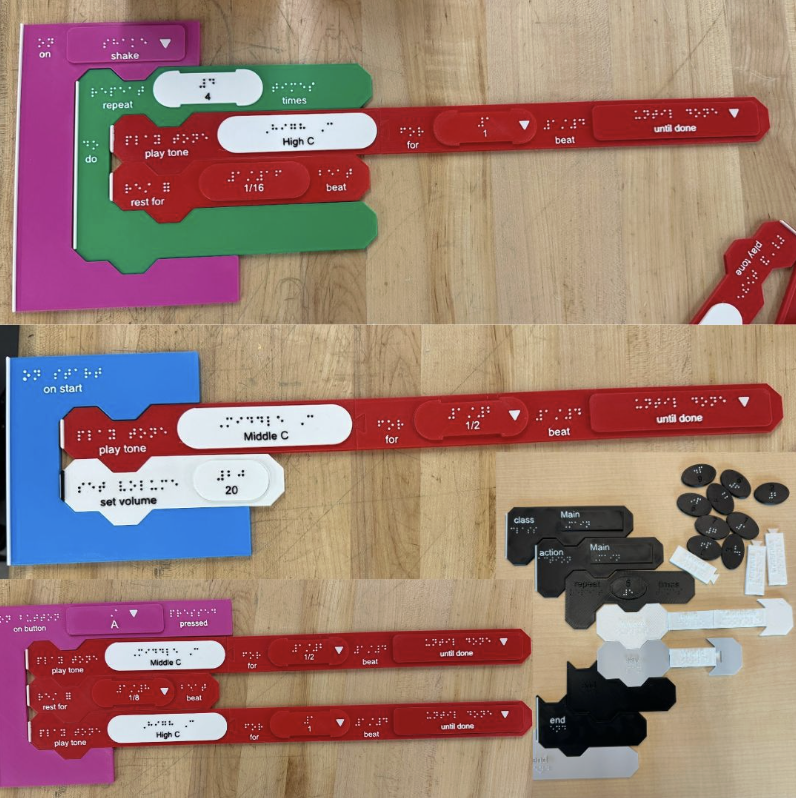
The full block library — 3D-printed, braille-embedded, snap-together coding blocks
~$15
Our Cost Per Block
FDM 3D printed, iteratively refined
vs.
$500+
Market Alternatives
When they exist at all
Technical Progression
- Designed the game.game library block, incorporating Grade 1 Braille and dovetail connector extensions for snap-together modularity
- Iterated the block geometry for a cleaner aesthetic fit and improved the dovetail mechanism for better physical engagement between pieces
- Outlined the full library implementation system, including the "use Libraries" block and end cap design to terminate sequences cleanly
- Adapted a "sum" block into an "assignment" block, reworking the geometry to ensure clean fit with adjacent variable blocks
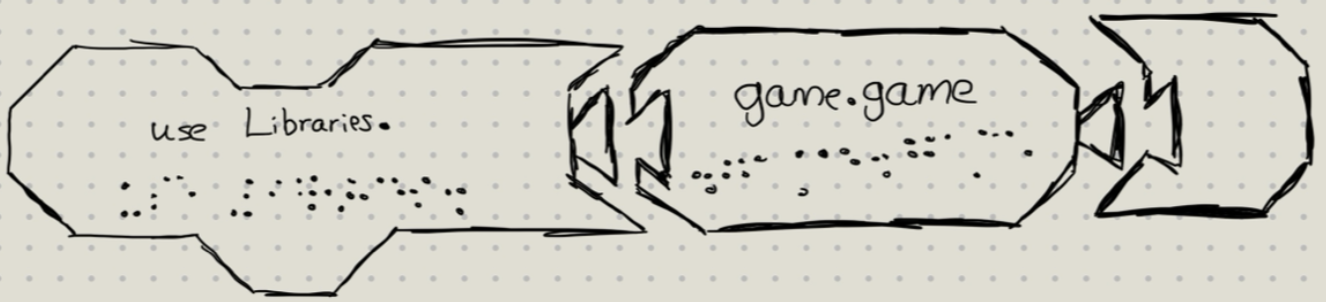
Early concept sketch — use Libraries / game.game block layout and connector system
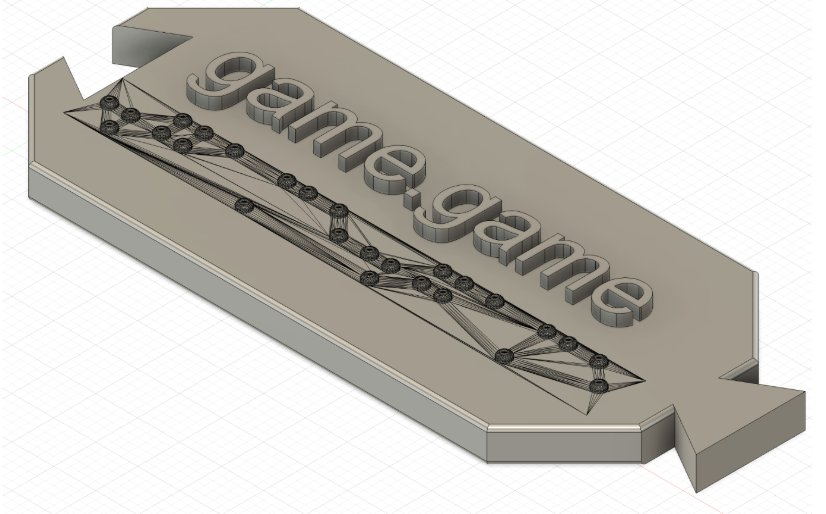
game.game library block — braille + dovetail connectors
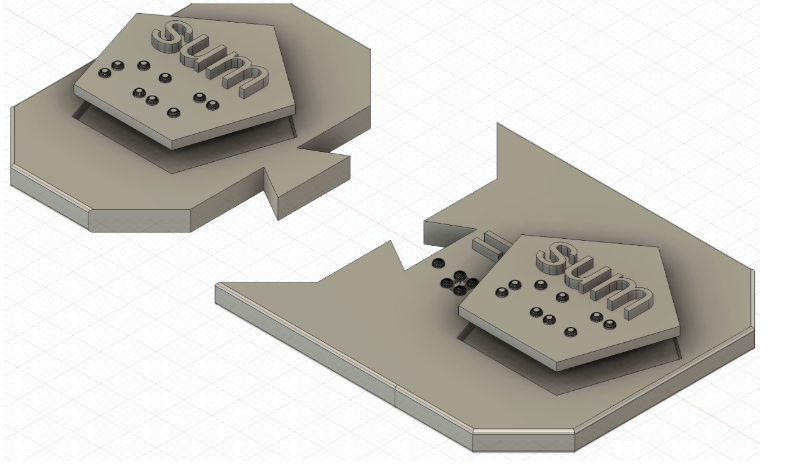
sum → assignment block — geometry rework for variable block fit
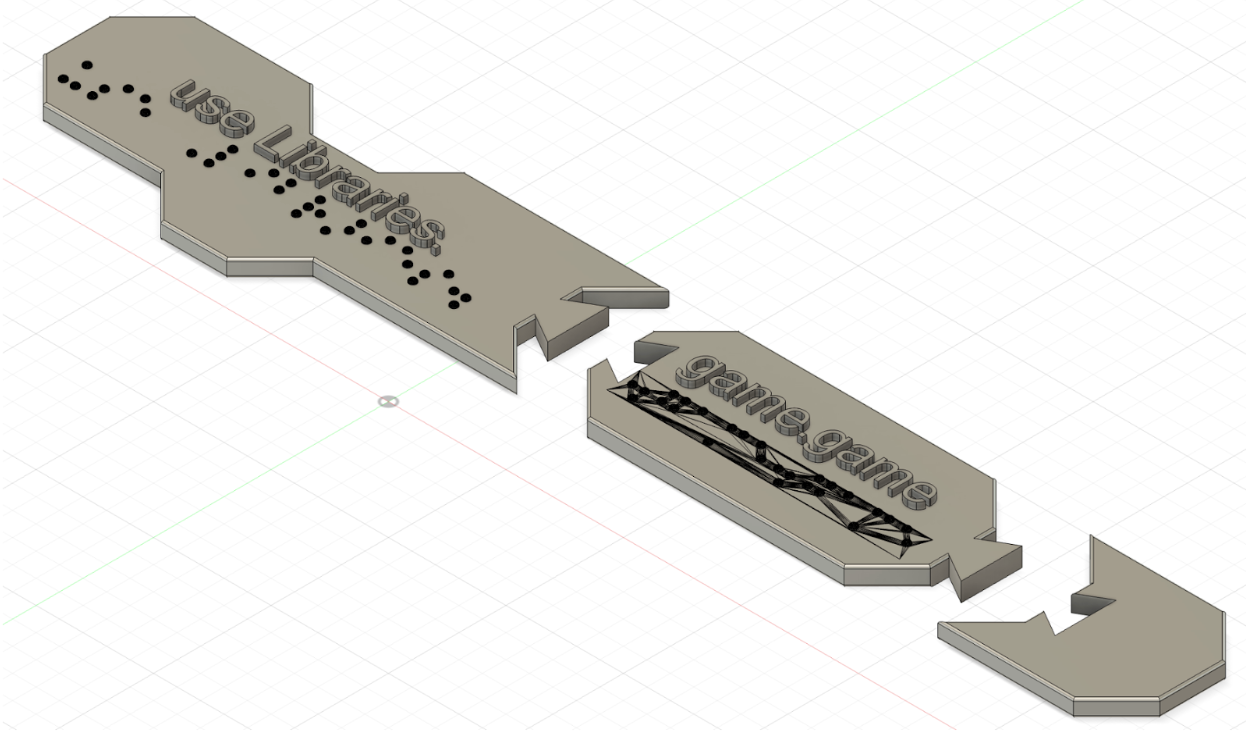
use Libraries + game.game full assembly — complete sequence with end cap
- Recognized inconsistent tolerances across the team's growing block library — created a fully constrained parametric base sketch in Fusion 360 that became the standardized template for all future blocks
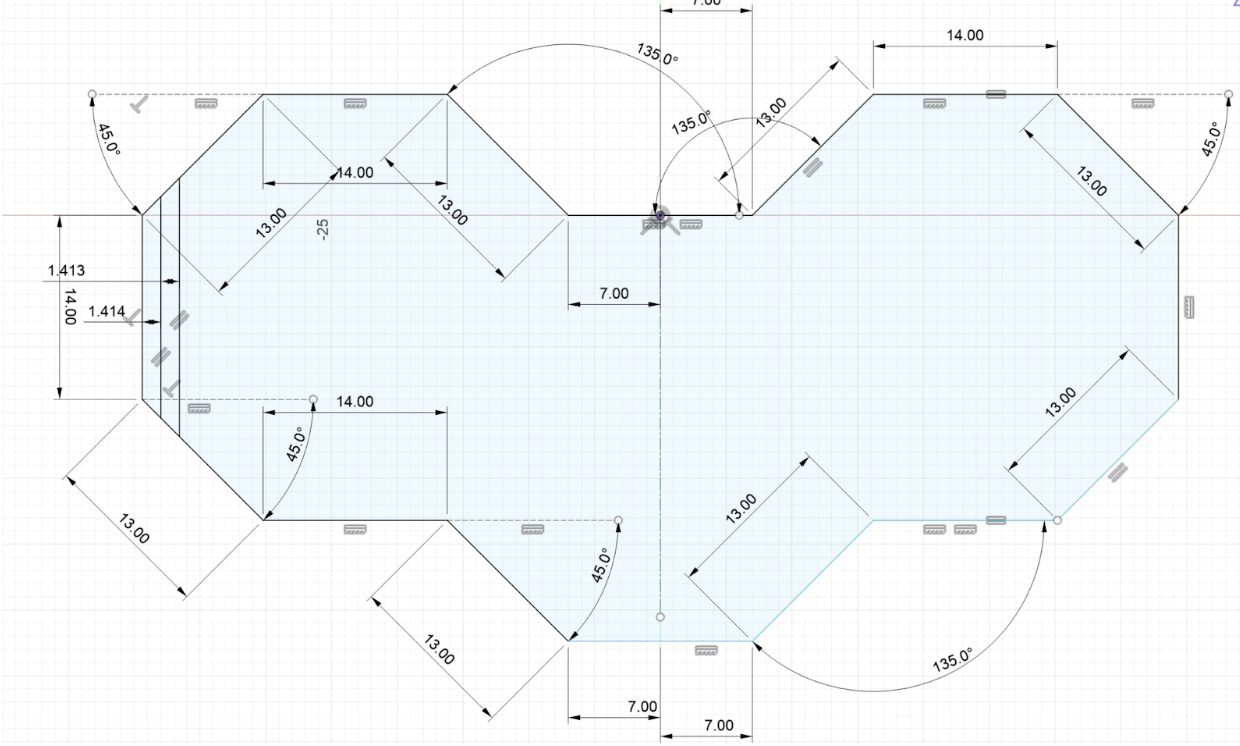
Constrained base sketch — parametric template that standardized tolerances across the entire library
- Designed the "play" block in both braille and non-braille versions based on direct feedback from the Micro:bit team and end users
- After user testing, reworked "play" into a "play tone" block — extending it to accept additional variables for note and beat
- Designed a set of modular Note Blocks (High C, Middle C, Middle D#, High E) that snap into the play tone block as interchangeable inputs
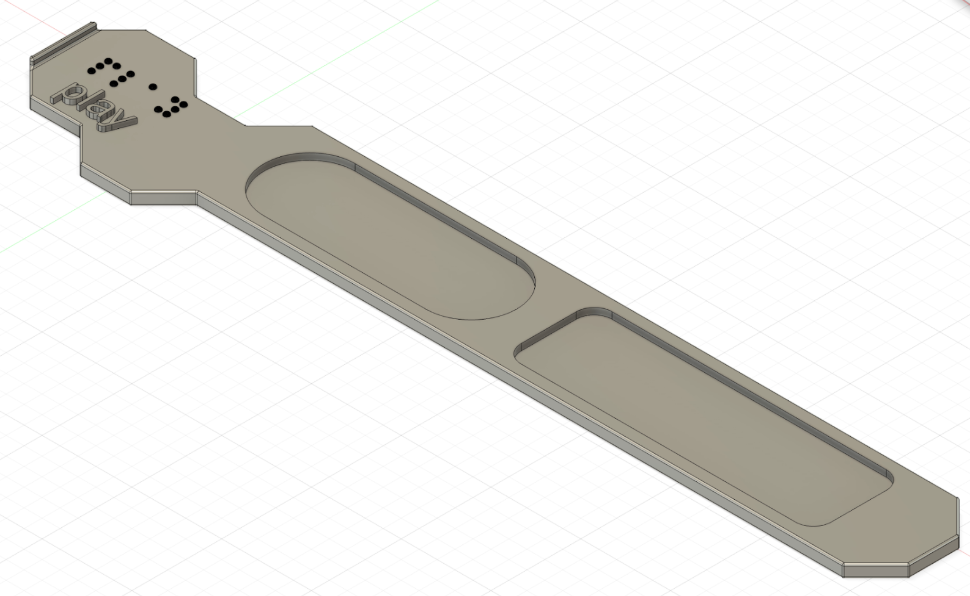
play block — braille version
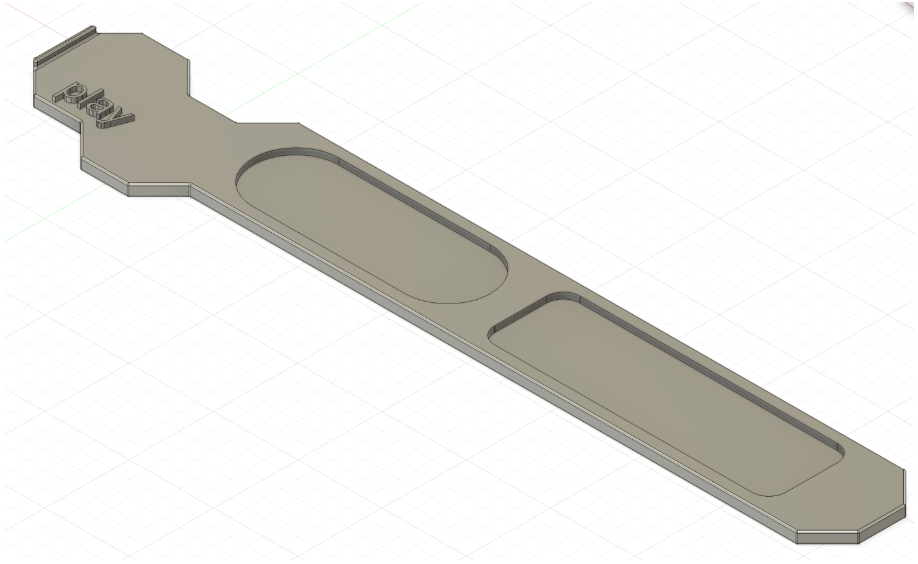
play block — non-braille version
Engineering Problem
Print bed constraint → dovetail split-and-rejoin solution
Extending the "play" block with additional variable slots pushed the part beyond the printer's build volume. Rather than simplify the design, I engineered a dovetail split joint that divides the block into two printable halves with carefully tuned tolerances — tight enough for a solid, seamless connection, loose enough for repeatable assembly without tools. The two halves rejoin with the same dovetail geometry used throughout the library, keeping the interface consistent for users.
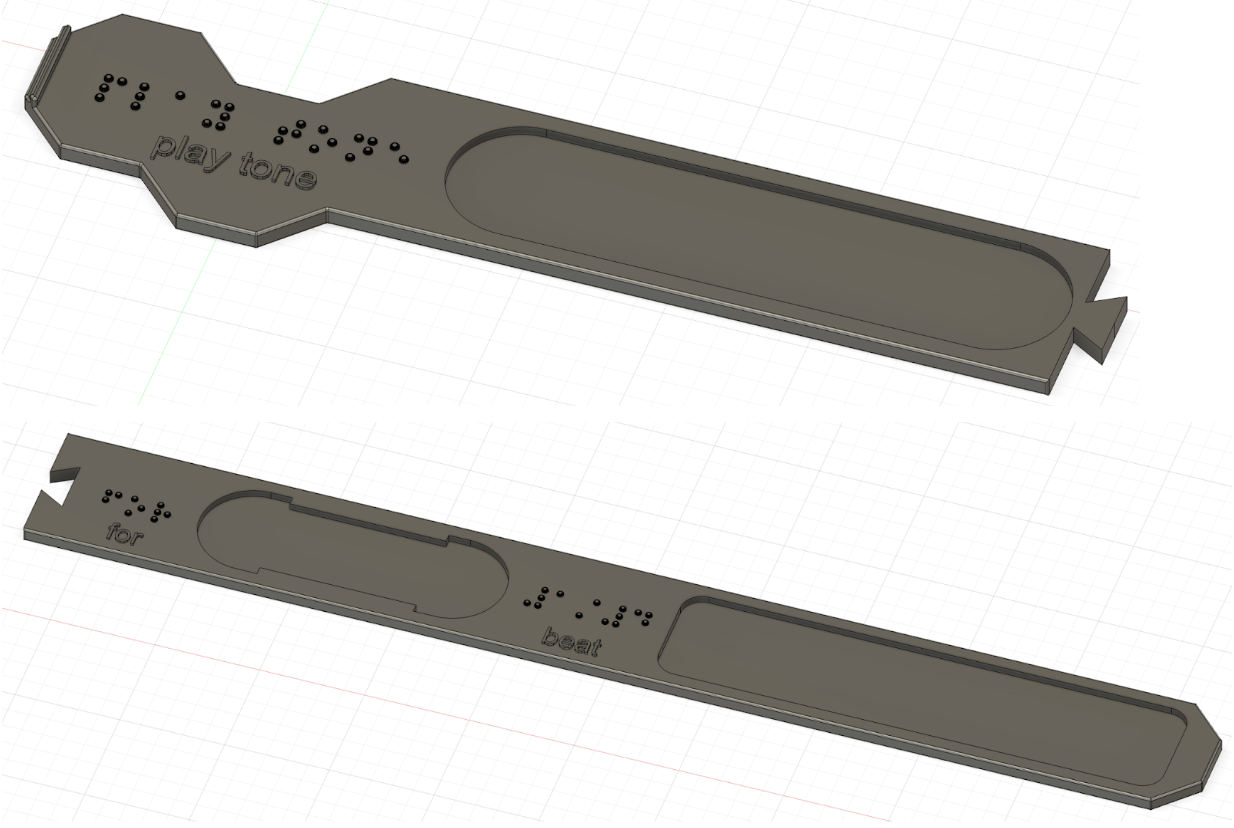
play tone block — dovetail split into two printable halves, with "for" and "beat" extension blocks
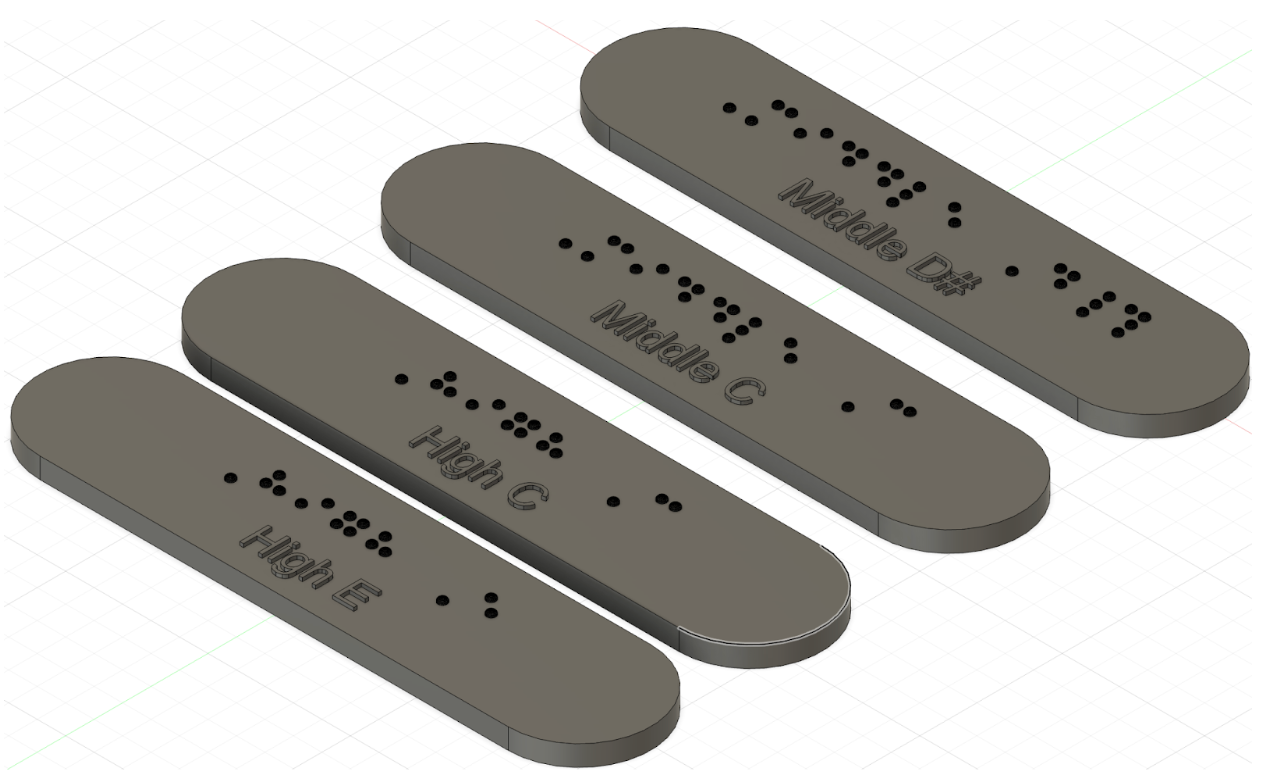
Note Blocks — High C, Middle C, Middle D#, High E; snap into play tone block as interchangeable inputs
- Designed compact event-trigger blocks — "when" and "when I shake" — with embedded Braille and tactile icon cutouts (play button, shake icon, phone icon) for an additional block-coding platform
- These were produced in dual-color AMS filament (black/white) — the first blocks in the project to move from prototype gray to a production-style finish with visual contrast for low-vision users
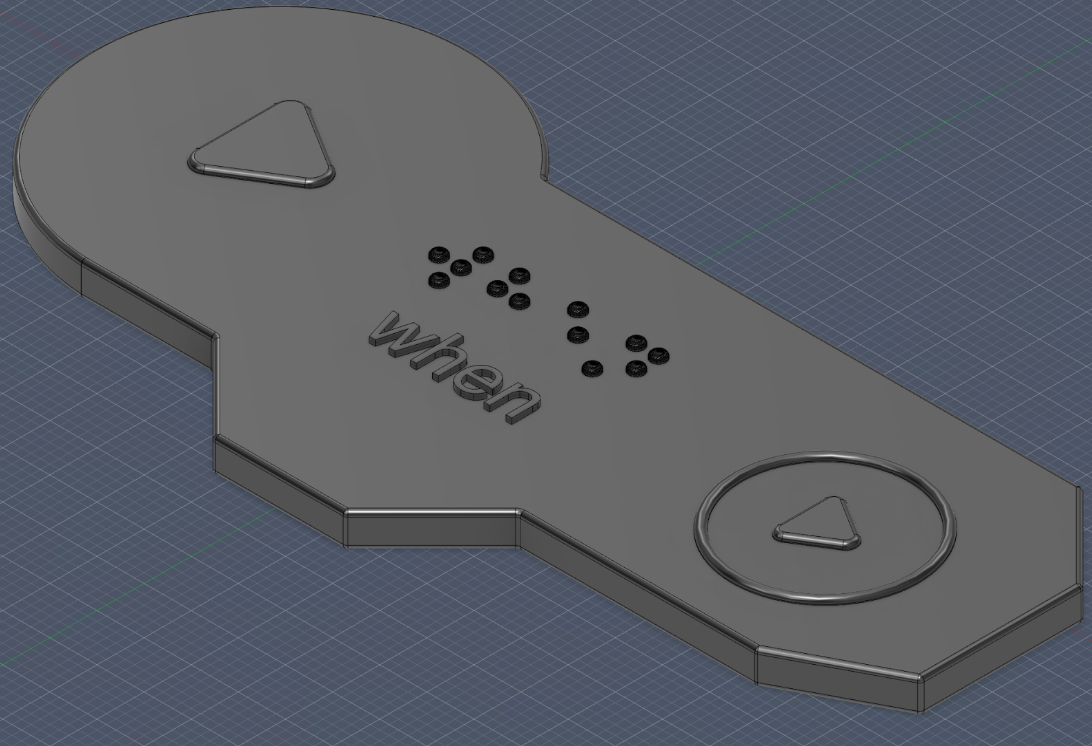
"when" block — CAD
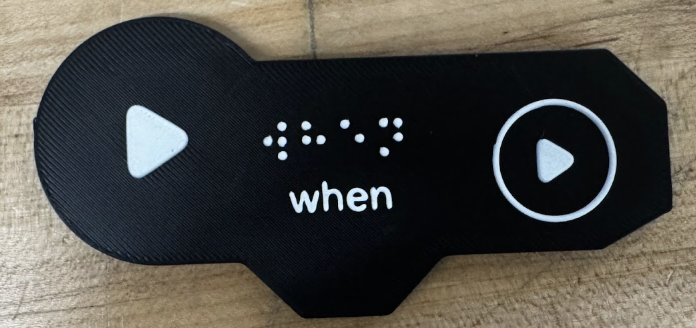
"when" block — final black/white print
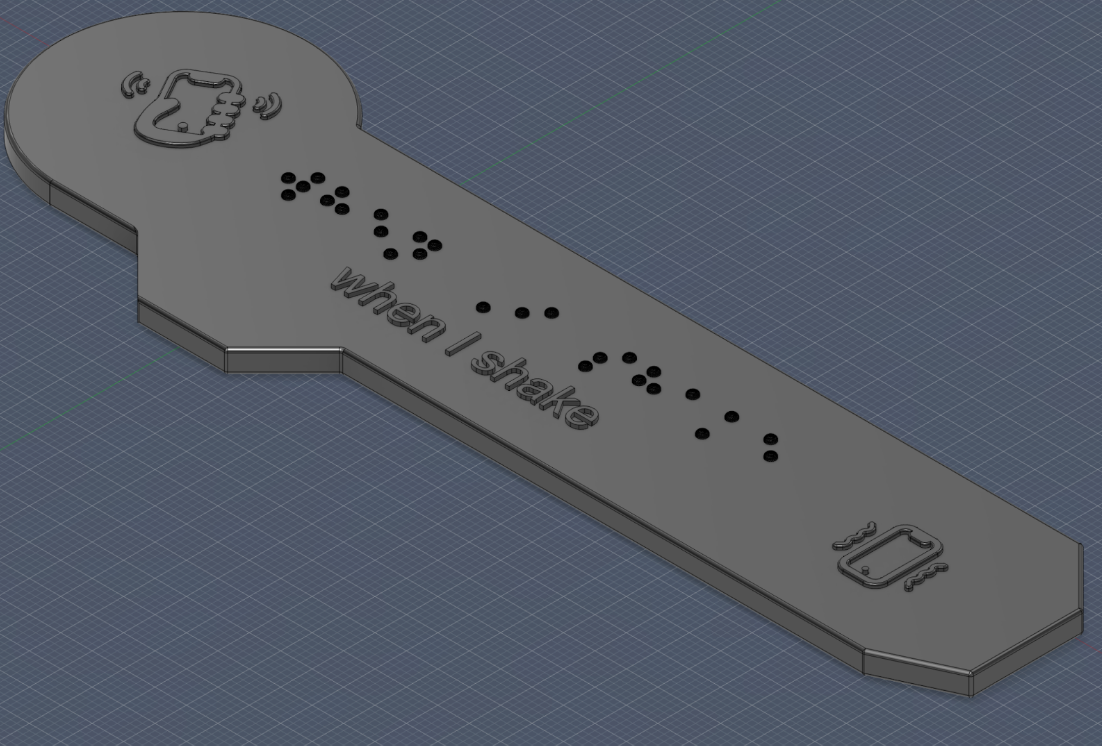
"when I shake" block — CAD
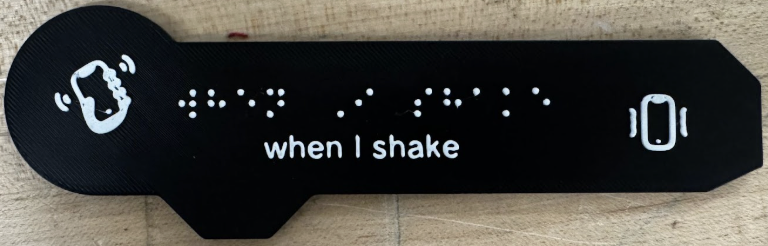
"when I shake" block — final print
Recognition
2nd Place — RESNA 2026 Student Design Challenge
The team presented Tactile Coding Blocks at the RESNA 2026 Annual Conference in the Student Design Challenge — a national competition for student-built assistive technology. Out of teams from universities across the country, we placed 2nd overall. The judges highlighted the project's low cost, real-world testability, and the directness of the solution to a gap in accessible CS education.
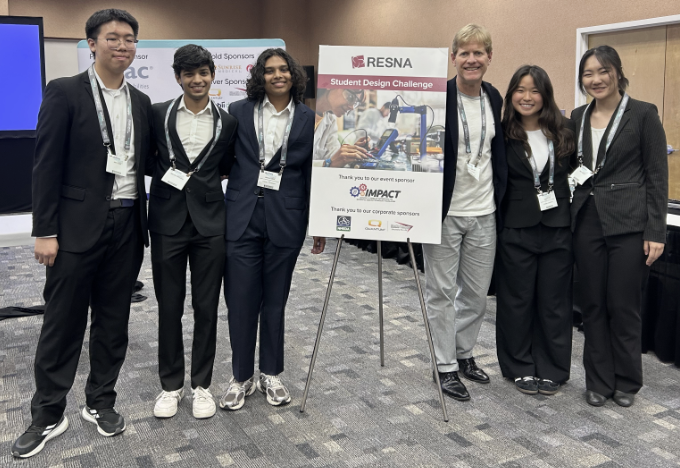
RESNA 2026 Student Design Challenge — 2nd place, New York Metro
Reflection
What I took away
- Standardization upfront saves enormous time downstream. Once the team locked in consistent tolerances and a shared base sketch, every block that followed got faster to design. The parametric template was the single highest-leverage thing I contributed.
- Team organization is a force multiplier. Centralizing CAD files and documenting dimension standards made it possible to hand off work cleanly — without it, each new block would have required rediscovering decisions already made.
- Front-load the fuzzy work. The projects that went smoothest were the ones where we did brainstorming and early prototyping before we thought we needed to. Constraints get clearer once you have something physical in your hands.
Links